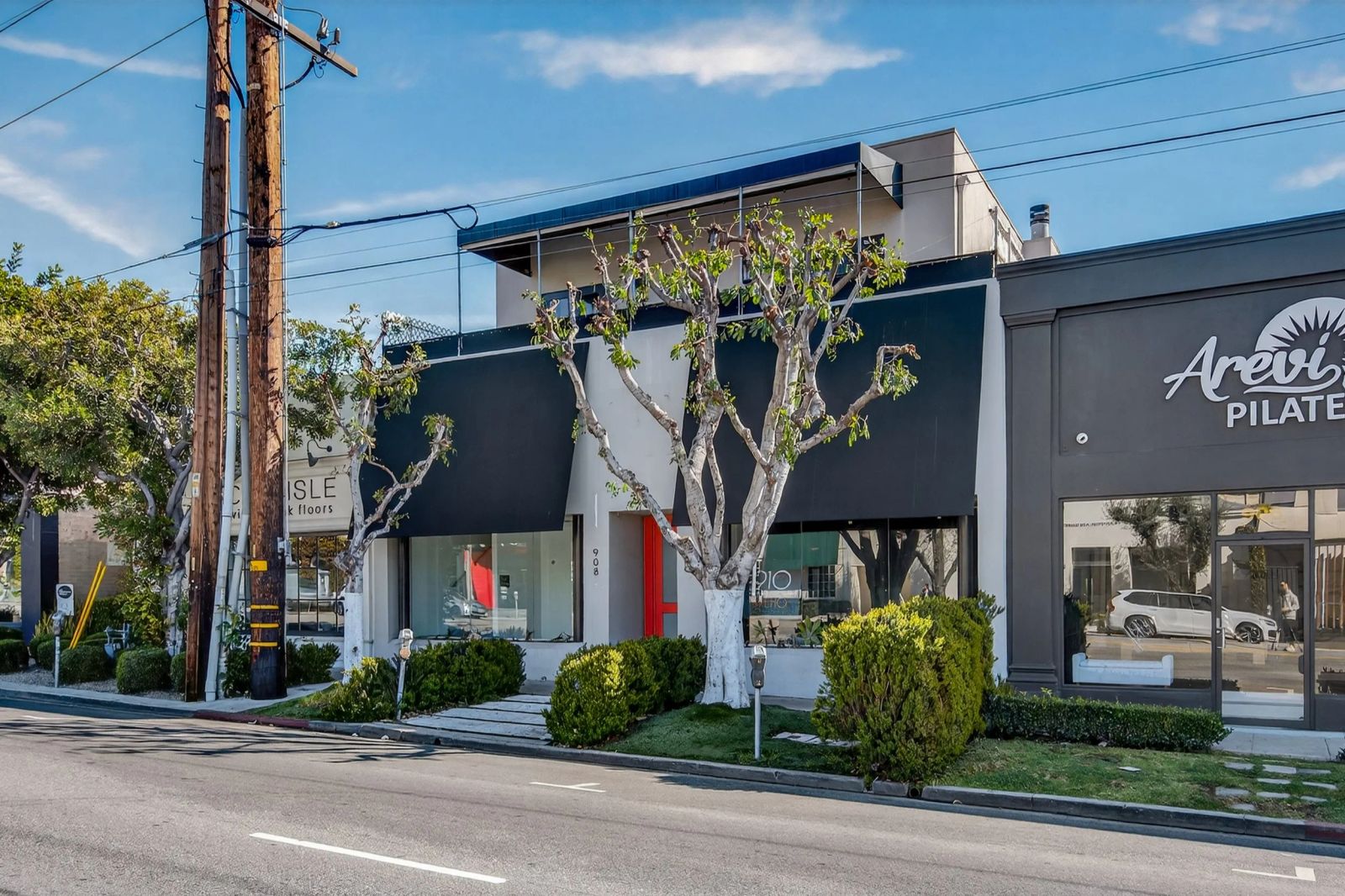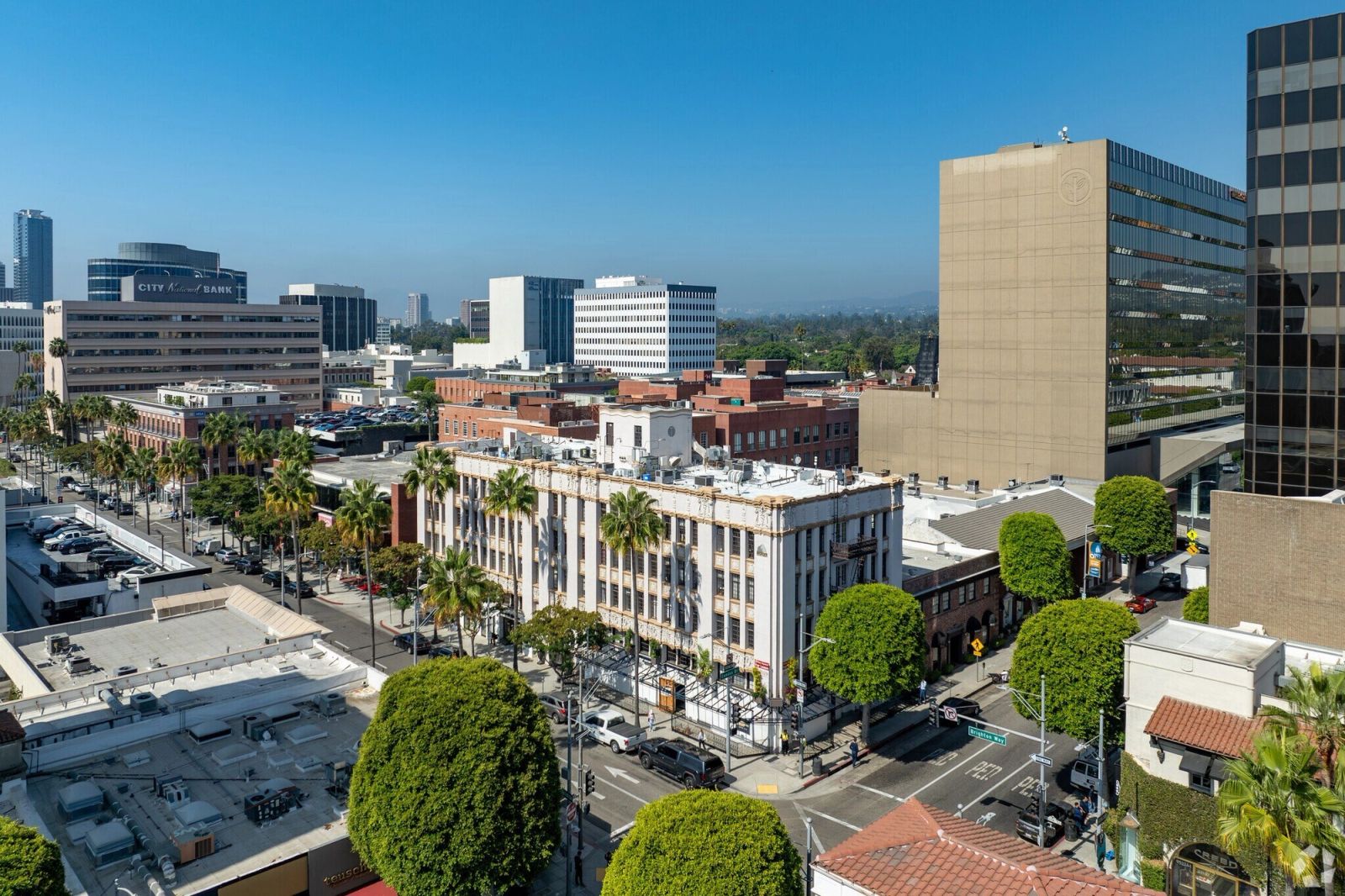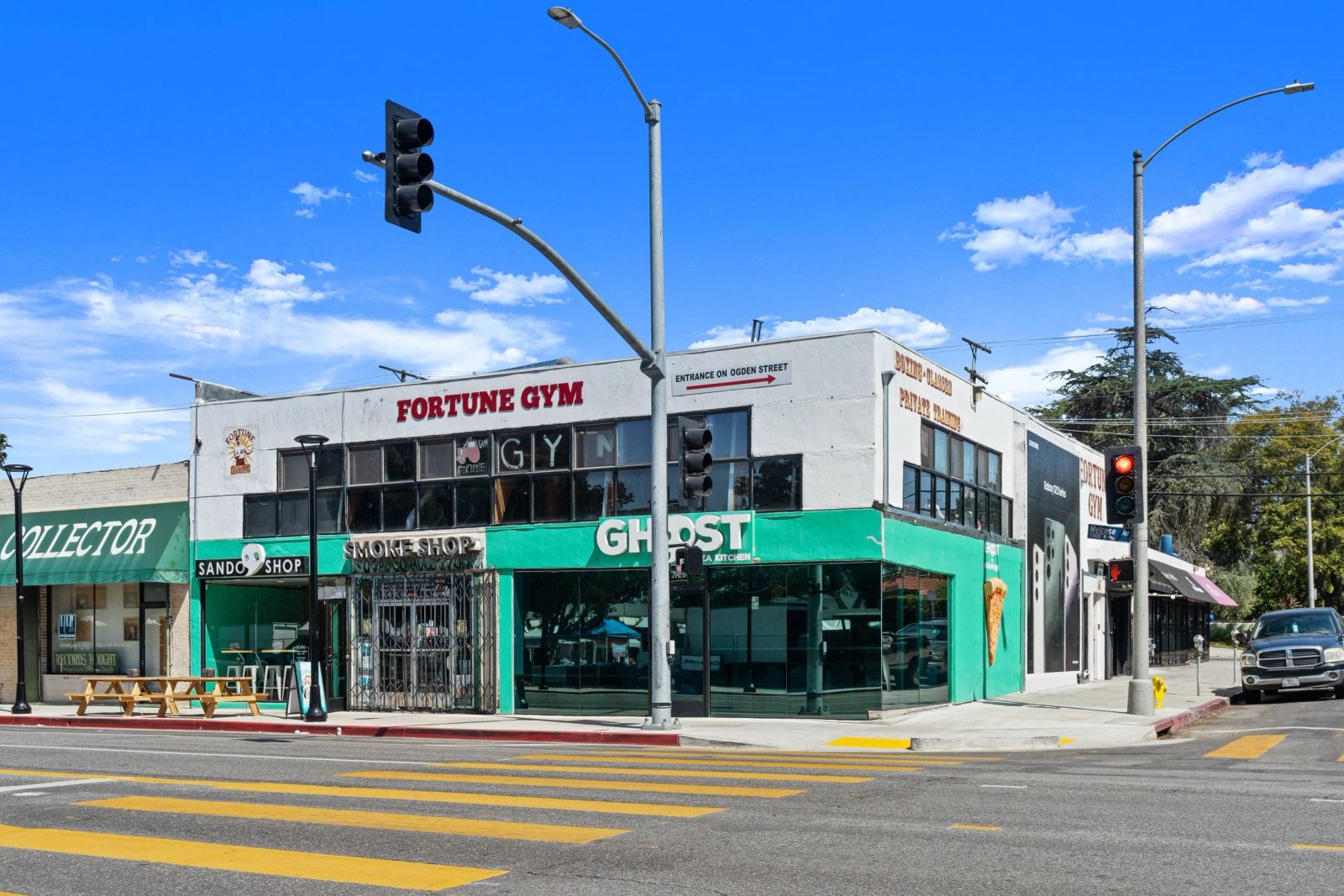
A three-story retail and office compound on a street like La Cienega Boulevard combines storefront exposure with workspace above or behind it. That mix can be an advantage, and it also means the property has to be read in layers.
A three-story retail and office compound on a street like La Cienega Boulevard combines storefront exposure with workspace above or behind it. That mix can be an advantage, and it also means the property has to be read in layers. 910 N La Cienega Blvd, one of our representative assignments, is a property of this kind. It is a useful reference point for the questions below, which apply to any compound that mixes retail and office in Los Angeles.
Why compounds are different
A compound is more than one building on one lot. It usually has several spaces, several tenants and shared areas, and each of them can follow a different lease and a different logic. Retail tenants care about the street: visibility, signage, foot traffic and access. Office tenants care about the space itself: light, privacy, parking and how easy it is to arrive. A property that serves both well can hold its income through changes in one category, while one that serves neither can be hard to lease.
Start with the street
Los Angeles value can change from one block to the next, and La Cienega is a corridor where identity matters. Look at the frontage, the corner exposure, the traffic that passes by, parking and the businesses already on the street. Ask whether the ground-floor space can serve more than one kind of tenant, because flexibility is what protects an owner when a tenant leaves.
Read the tenant mix
In a compound, the rent roll tells much of the story. Ask the following questions of every space.
- Lease term and rollover. How much of the income could expire in the next few years, and is it concentrated in one year?
- Rent compared with the market. Are leases below or above what the space would lease for today?
- Tenant profile. Who pays the rent, and how dependent is the building on one occupant?
- Expense structure. Are the leases gross, modified gross or net, and who carries rising costs?
A buyer will price a property on the income it can rely on and on the work still to do. Short lease terms may be an opportunity for a buyer who plans to lease up, and a risk for one who wants stable income.
Look at the building and the upper floors
Upper floors behave differently from storefronts. Access, elevators or stairs, ceiling heights, systems, restrooms and parking all affect who can use the space and at what rent. Age and deferred maintenance matter in any building, and in a multi-story compound they are easy to overlook until a roof, a system or an accessibility upgrade comes due. Estimate the capital the property will need over the next several years before comparing holding with selling.
Check zoning and permitted uses
Zoning decides what the spaces can be used for and what the property can become. Permitted uses, parking requirements and any restrictions on change of use should be reviewed before a price is agreed. Restaurant and medical uses in particular depend on infrastructure that is costly to add, so confirm what a space can support before assuming a tenant type.
Remember the city line
La Cienega crosses several jurisdictions. Beverly Hills is a separate city, while the stretch to the north belongs to the City of Los Angeles, and the rules that apply to a sale can differ between them. The City of Los Angeles adds Measure ULA, a transfer tax on sales above set thresholds, on top of existing transfer taxes. Because these rules have been the subject of reform efforts, confirm what applies at the time of pricing. Under California's Proposition 13, a change in ownership also generally brings reassessment of property tax, so buyers should underwrite the tax bill they will pay.
For owners: hold, reposition or sell
An owner of a compound has more options than a simple sale. The property can be held for its income, repositioned through leasing and improvements, or sold, and a sale can be followed by a 1031 exchange into a different property. The right answer depends on your objectives, the lease calendar and the capital the building needs. Our hold vs. sell questions are a good place to start.
For investors: who buys this property later
Every purchase is also a future sale. A compound with a diverse tenant mix, a clear lease schedule and good street presence appeals to a wider set of buyers than one that relies on a single tenant. Ask who would want the property in five or ten years, and why.
Questions to ask early
- How does each space perform on its own, and what would it lease for today?
- How much income is exposed to lease expirations in the next few years?
- What capital will the building need, and when?
- Do zoning and existing approvals allow the uses planned?
- What does a sale cost in this specific city?
How Origin Commercial Group approaches it
As a commercial brokerage in Los Angeles, we begin with the owner's objectives and then move to the property. Our representative assignments include retail, office and mixed compounds across Greater Los Angeles, such as 910 N La Cienega Blvd. If you are considering a purchase, a sale or a lease of a property like this, speak with our team through the contact page.
This article is general information, not tax, legal or financial advice. Properties are shown as representative assignments and are not offered for sale here.